Tracer Labs
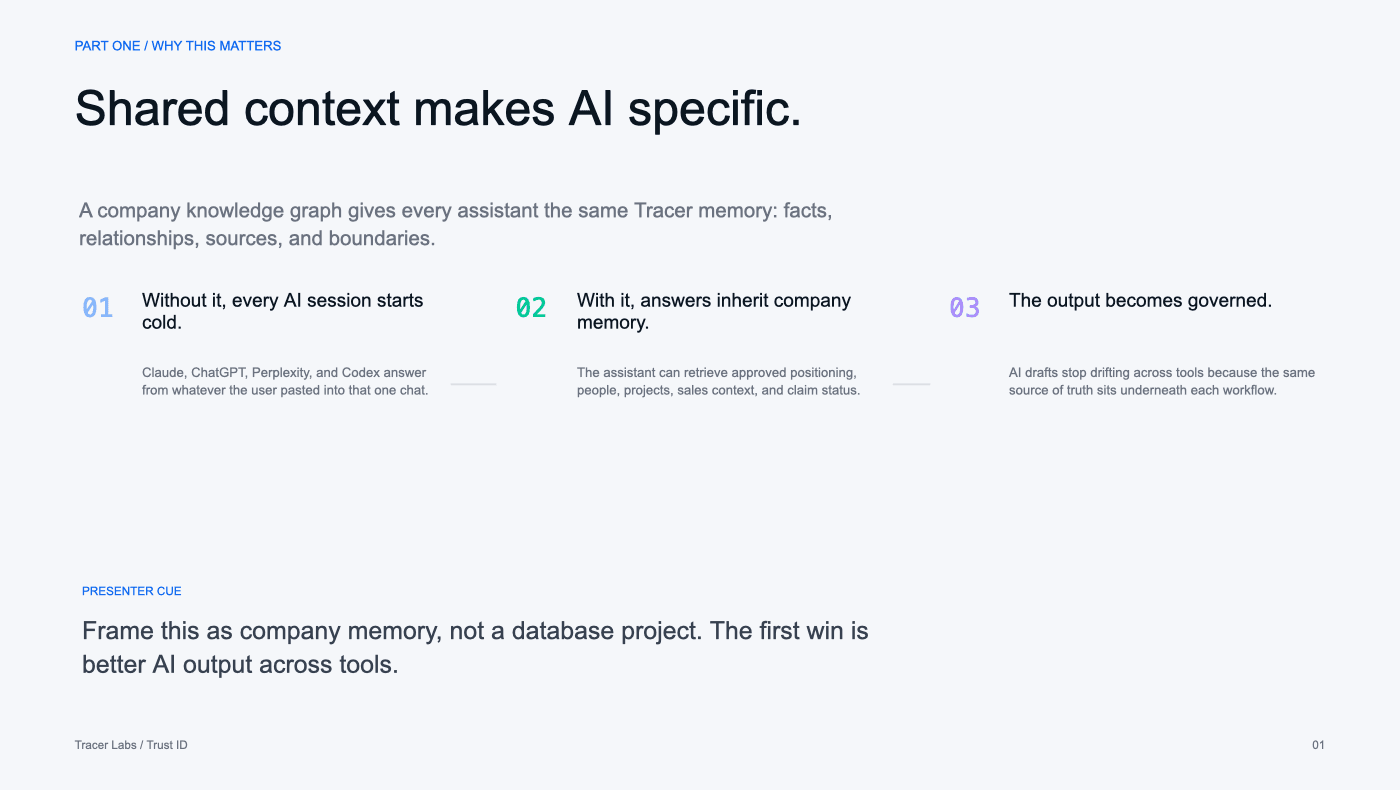
One shared company library gives several AI assistants the same facts, rules, and approved wording.
Help the team reuse accurate company information in investor materials, buyer conversations, research, and outreach without sending private information to the wrong tool.
I broke the source files into linked notes, marked where each note could be used, gave every AI assistant the same instructions, and added checks for old or unsupported claims.
Several AI assistants can now use the same reviewed company notes. The team can update a fact once and check a draft before it leaves the company.
This is one example from the work. The sections below explain the problem, what I did, and the result.
MY ROLE
I worked with the founding team as an AI Strategy Advisor. I helped with company messaging, investor positioning, the shared knowledge library, AI workflows, and the rules for using them.
BACKGROUND
The same company facts were being rebuilt in several places.
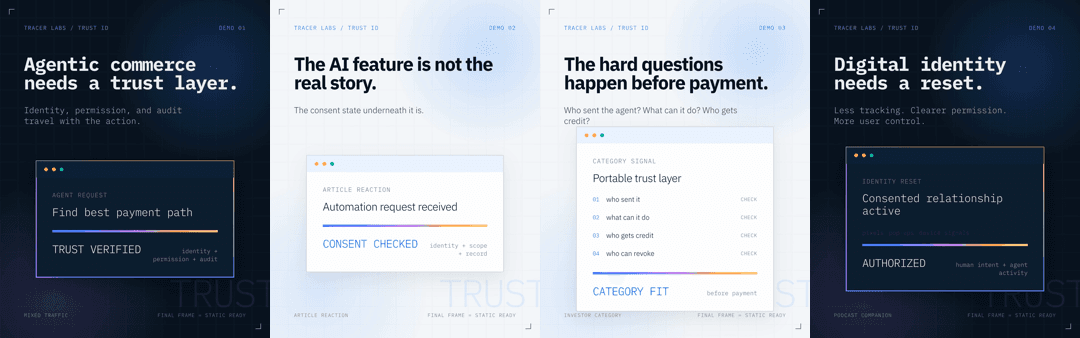
Tracer Labs builds identity and consent tools for AI agents that act for people and businesses. The company needed to explain that technical product to investors, partners, security leaders, and enterprise buyers.
The useful context already existed, but it was spread across decks, briefs, source files, and separate AI chats. That made it easy for an old claim, the wrong level of detail, or private information to appear in the wrong draft.
THE GOAL
Give the team one reviewed place for company context.
Several AI tools needed to use the same material. The source, access limits, owner, and final review still had to stay clear.
Collect the sources
Company decks, product notes, market research, and approved language feed one private repository.
Turn source files into useful notes
The repository contains 235 linked notes organized around the product, buyers, claims, market, and company messaging.
Mark what can leave the company
Each note says whether the information is public, internal, sensitive, approved, or waiting for review.
Give each AI tool the same rules
Shared instruction files tell each AI tool how to read, draft from, and check company material.
WHAT THE LIBRARY IS USED FOR
The team uses the same reviewed notes for several kinds of work.
Investor and buyer briefings
The team can reuse approved facts while changing the depth and language for investors, partners, security teams, or enterprise buyers.
Use cases for AI agents
A use case map shows how identity, permission, revocation, attribution, and audit solve specific buyer problems when AI agents act for people.
Outbound preparation
Public profile research becomes a suggested angle, sender-specific connection, useful deck, confidence note, and draft for a person to review.
Keep the library current
Protected-file rules, update steps, setup guides, and review owners help the repository stay useful after the first build.
WHAT CHANGED
Company context now has a source, an owner, and a review path.
Before this work, a new AI chat often began by rebuilding the company background. Now the assistants can start from the same organized material and follow the same limits.
The library also shows what is missing. If a claim has no source, a file is old, or a subject has not been documented, the team can fix the gap in the repository instead of leaving it inside one chat.